About This Blog

About The 'Socrates 4 Today' Project

Whether we like it or not, we all have important Life Choices to make, and these choices are largely ‘philosophical’ in nature. Knowing about some of the ideas of Socrates, Plato and Aristotle can help us all make more informed life choices today and live happier and more fulfilled lives as a result.

The Socrates 4 Today project is not an official group or institution of any kind, but rather an umbrella banner for a loose collection of friends (and occasionally friendly organisations) to carry out philosophy related activities. These friends all share the idea that the ancient (yet living) ‘real’ philosophy and wisdom of Socrates, Plato and Aristotle has relevance and importance for us all today.

While some of these friends might enjoy a more academic approach to this philosophy personally, they all share the view that philosophy is essentially a ‘practical’ subject, and is something to be applied to the way we live our lives – not just read about in a book. (Even Plato himself says, there is only so much you can learn about philosophy from a book!) Hence, there will be some blog posts about ‘practical philosophy’ projects along with the usual posts about the ideas of Socrates, Plato and Aristotle.

It is hoped that the Socrates 4 Today Project will help to make some of the central ideas and themes of Socrates, Plato, Aristotle and some of the other Greek philosophers more relevant to a wider modern audience. ‘Real’ philosophy after all is said and done – is simply about giving people important tips for living a better, happier and more meaningful life. It is about making better and more informed Life Choices today, and trying to live wisely……

Showing posts with label Plato. Show all posts

Tuesday, 14 March 2023

Extracts from Plato's Republic - The Myth of the Cave

 For talk in Athens - Thursday 23rd March - 2023


Extracts of Plato’s Cave:

(Plato’s Book Republic – 514a to 517a)

Translated by:  Waterfield, Robin. Republic (Oxford World's Classics) OUP Oxford. Kindle Edition.

The Prisoner Ascends from the Cave   (Plato’s Republic – 514a to 517a)

514a ‘Next,’ I said, ‘here’s a situation which you can use as an analogy for the human condition—for our education or lack of it. Imagine people living in a cavernous cell down under the ground; at the far end of the cave, a long way off, there’s an entrance open to the outside world. They’ve been there since childhood, with their legs and necks tied up in a way which keeps them in one place and allows them to look only straight ahead, but not to turn their heads. There’s firelight burning a long way further up the cave behind them, and up the slope between the fire and the prisoners there’s a road, beside which you should imagine a low wall has been built—like the partition which conjurors place between themselves and their audience and above which they show their tricks.’ B

‘All right,’ he said.

‘Imagine also that there are people on the other side of this wall who are carrying all sorts of artefacts. These artefacts, human statuettes, and animal models carved in stone and wood and all kinds of materials stick out over the wall; and as you’d expect, some of the people talk as they carry these objects along, while others are silent.’ c

515a

‘This is a strange picture you’re painting,’ he said, ‘with strange prisoners.’

‘They’re no different from us,’ I said. ‘I mean, in the first place, do you think they’d see anything of themselves and one another except the shadows cast by the fire on to the cave wall directly opposite them?’

‘Of course not,’ he said. ‘They’re forced to spend their lives without moving their heads.’ ‘And what about the objects which were being carried along? Won’t they only see their shadows as well?’ b

‘Naturally.’ ‘Now, suppose they were able to talk to one another: don’t you think they’d assume that their words applied to what they saw passing by in front of them?

‘They couldn’t think otherwise.’

“And what if sound echoed off the prison wall opposite them? When any of the passers-by spoke, don’t you think they’d be bound to assume that the sound came from a passing shadow?’

‘I’m absolutely certain of it,’ he said.

‘All in all, then,’ I said, ‘the shadows of artefacts would constitute the only reality people in this situation would recognize.’ c

‘That’s absolutely inevitable,’ he agreed. d

‘What do you think would happen, then,’ I asked, ‘if they were set free from their bonds and cured of their inanity? What would it be like if they found that happening to them? Imagine that one of them has been set free and is suddenly made to stand up, to turn his head and walk, and to look towards the firelight. It hurts him to do all this and he’s too dazzled to be capable of making out the objects whose shadows he’d formerly been looking at. And suppose someone tells him that what he’s been seeing all this time has no substance, and that he’s now closer to reality and is seeing more accurately, because of the greater reality of the things in front of his eyes—what do you imagine his reaction would be? And what do you think he’d say if he were shown any of the passing objects and had to respond to being asked what it was? Don’t you think he’d be bewildered and would think that there was more reality in what he’d been seeing before than in what he was being shown now?’

‘Far more,’ he said.

‘And if he were forced to look at the actual firelight, don’t you think it would hurt his eyes? Don’t you think he’d turn away and run back to the things he could make out, and would take the truth of the matter to be that these things are clearer than what he was being shown?’ e

‘Yes,’ he agreed.

‘And imagine him being dragged forcibly away from there up the rough, steep slope,’ I went on, ‘without being released until he’s been pulled out into the sunlight. Wouldn’t this treatment cause him pain and distress? And once he’s reached the sunlight, he wouldn’t be able to see a single one of the things which are currently taken to be real, would he, because his eyes would be overwhelmed by the sun’s beams?’

516a

‘No, he wouldn’t,’ he answered, ‘not straight away.’

‘He wouldn’t be able to see things up on the surface of the earth, I suppose, until he’d got used to his situation. At first, it would be shadows that he could most easily make out, then he’d move on to the reflections of people and so on in water, and later he’d be able to see the actual things themselves. Next, he’d feast his eyes on the heavenly bodies and the heavens themselves, which would be easier at night: he’d look at the light of the stars and the moon, rather than at the sun and sunlight during the daytime.’ b

‘Of course.’

‘And at last, I imagine, he’d be able to discern and feast his eyes on the sun—not the displaced image of the sun in water or elsewhere, but the sun on its own, in its proper place.’

‘Yes, he’d inevitably come to that,’ he said.

‘After that, he’d start to think about the sun and he’d deduce that it is the source of the seasons and the yearly cycle, that the whole of the visible realm is its domain, and that in a sense everything which he and his peers used to see is its responsibility.’ c

‘Yes, that would obviously be the next point he’d come to,’ he agreed.

‘Now, if he recalled the cell where he’d originally lived and what passed for knowledge there and his former fellow prisoners, don’t you think he’d feel happy about his own altered circumstances, and sorry for them?’

‘Definitely.’

‘Suppose that the prisoners used to assign prestige and credit to one another, in the sense that they rewarded speed at recognizing the shadows as they passed, and the ability to remember which ones normally come earlier and later and at the same time as which other ones, and expertise at using this as a basis for guessing which ones would arrive next. Do you think our former prisoner would covet these honours and would envy the people who had status and power there, or would he much prefer, as Homer describes it, “being a slave labouring for someone else—someone without property”, and would put up with anything at all, in fact, rather than share their beliefs and their life?’ d

‘Yes, I think he’d go through anything rather than live that way,’ he said. e

‘Here’s something else I’d like your opinion about,’ I said. ‘If he went back underground and sat down again in the same spot, wouldn’t the sudden transition from the sunlight mean that his eyes would be overwhelmed by darkness?’

 ‘Certainly,’ he replied.

‘Now, the process of adjustment would be quite long this time, and suppose that before his eyes had settled down and while he wasn’t seeing well, he had once again to compete against those same old prisoners at identifying those shadows. Wouldn’t he make a fool of himself? Wouldn’t they say that he’d come back from his upward journey with his eyes ruined, and that it wasn’t even worth trying to go up there? And wouldn’t they—if they could—grab hold of anyone who tried to set them free and take them up there, and kill him?’

517a

‘They certainly would,’ he said.


The Escaped Prisoner Must Go Down Into The Darkness Again To Help The Others

(Republic-519c/d to 520e):

‘Our job as founders, then,’ I said, ‘is to make sure that the best people come to that fundamental field of study (as we called it earlier): we must have them make the ascent we’ve been talking about and see goodness. And afterwards, once they’ve been up there and had a good look, we mustn’t let them get away with what they do at the moment.’  e

‘Which is what?’

 ‘Staying there,’ I replied, ‘and refusing to come back down again to those prisoners, to share their work and their rewards, no matter whether those rewards are trivial or significant.’

‘But in that case,’ he protested, ‘we’ll be wronging them: we’ll be making the quality of their lives worse and denying them the better life they could be living, won’t we?’

‘You’re again forgetting, my friend,’ I said, ‘that the point of legislation is not to make one section of a community better off than the rest, but to engineer this for the community as a whole. Legislators should persuade or compel the members of a community to mesh together, should make every individual share with his fellows the benefit which he is capable of contributing to the common welfare, and should ensure that the community does contain people with this capacity; and the purpose of all this is not for legislators to leave people to choose their own directions, but for them to use people to bind the community together.’ e

520a

‘Yes, you’re right,’ he said. ‘I was forgetting.’ b

 ‘I think you’ll also find, Glaucon,’ I said, ‘that we won’t be wronging any philosophers who arise in our community. Our remarks, as we force them to take care of their fellow citizens and be their guardians, will be perfectly fair. We’ll tell them that it’s reasonable for philosophers who happen to occur in other communities not to share the work of those communities, since their occurrence was spontaneous, rather than planned by the political system of any of the communities in question, and it’s fair for anything which arises spontaneously and doesn’t owe its nurture to anyone or anything to have no interest in repaying anyone for having provided its nourishment. “We’ve bred you, however,” we’ll say, “to act, as it were, as the hive’s leaders and kings, for your own good as well as that of the rest of the community…..

You’ve received a better and more thorough education than those other philosophers, and you’re more capable of playing a part in both spheres. So each of you must, when your time comes, descend to where the rest of the community lives, and get used to looking at things in the dark. The point is that once you become acclimatized, you’ll see infinitely better than the others there; your experience of genuine right, morality, and goodness will enable you to identify every one of the images and recognize what it is an image of.

 And then the administration of our community—ours as well as yours—will be in the hands of people who are awake, as distinct from the norm nowadays of communities being governed by people who shadow-box and fall out with one another in their dreams over who should rule, as if that were a highly desirable thing to do. No, the truth of the matter is this: the less keen the would-be rulers of a community are to rule, the better and less divided the administration of that community is bound to be, but where the rulers feel the opposite, the administration is bound to be the opposite.”’ c d

Thursday, 15 October 2020

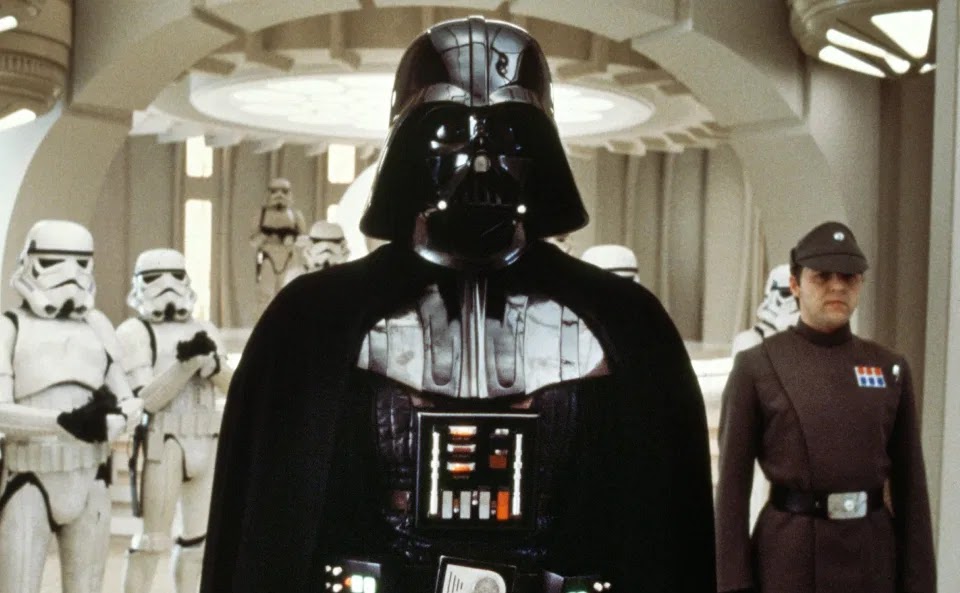
Where Does Evil Come From - Is Proclus Right ? - Or Darth Vader ?


From:  Life Choices - Important tips from Socrates, Plato and Aristotle

By James Head (New Edition – June 2020 https://www.amazon.com/dp/1540552624 )

From Essay 2 - The Nuts and Bolts of Plato


…….. My final point in this section on metaphysics is that Plato believes that the universe and everything in it has been created or has flowed out of the one source of everything, which is beyond all description, and which he calls ‘the One’ and/or ‘the Good’. This of course is an interesting idea for a man like Plato who was born and brought up as a polytheist to believe in the Olympic religion with many Gods. One thing I also find particularly interesting here (and a little irritating if I am honest) is that although he says that the One is beyond all description (in an almost scientific way) he then describes the One as the Good, which kind of adds a religious kind of dimension or overtone to it all. Plato also says that everything that flows out of the One is also good and perfect, but the further away things get from the One (the source of all things) the less perfect they become.

If everything that flows out of the One is good and perfect, then why is there evil and suffering in the world you may ask? Socrates advises us in many of his conversations with people, that it is wise before you start to discuss something, that you define exactly what you mean by the term being discussed - i.e. evil in this case. Is it a divine and malignant force operating in the universe (as suggested in the Star Wars movies or some major organised religions today) that affects us all if we are not very careful; or is it simply when human beings make badly judged, selfish, or irrational actions?

 For example, when a lioness jumps on an antelope and savagely kills it to feed her cubs, we usually do not regard that as evil at all; we just think of this as part of ‘nature’. However, when a man kills his neighbour for no apparent reason, of course we are shocked and consider it in some way an evil thing to do, since we consider the human being to be a civilised creature, capable of rational choices, and therefore having the facility to choose to act wisely and decently towards other people. So in a Platonic world view, evil (which is mainly what we tend to call certain ways of behaving) is really a lack of good intent or action, or the lack of control over one’s desires, or in the case of a madman – the lack of a correctly functioning rational mind.

Similarly, and more simply perhaps, if an earthquake kills 200 people, again we do not regard it as evil – just an act of nature; whereas the religious fanatic that blows up a passenger plane with 200 people on board we ‘regard’ as evil; since he lacks moderation in his religious beliefs and actions. Note that moderation (or temperance) is the visible expression of ‘The Good’, and as far as we human beings are concerned, largely concerned with the Life Choices we make.

I think as philosophers we need to consider whether good and evil really are external forces acting in the world around us (or even throughout the universe), or are they simply just human qualities; since we all seem to have the possibility of good and evil choices and actions within us. Hopefully, we choose ‘good’ (or at least ‘relatively good’) actions over evil ones. However, sometimes the situation gets a little blurred since if you killed 10 enemy soldiers in a war you might well receive a medal from your government for doing so. On the other hand, were you to kill the same 10 soldiers after the war had ended as they enjoyed a drink and discussed old stories of the war, you would no doubt be arrested and put on trial for murder.


Somehow, I want to believe in evil as an external force (you can blame the movie Star Wars and Darth Vader for that), but at times I am really not convinced whether evil is an external force or not. Sometimes I cannot help but wonder if the whole idea of ‘evil’ is a man-made concept rather than any external force operating in the universe; which we need to do our utmost to avoid. As far as our practical lives are concerned (in our human bodies at least), good and evil may be simply be about the choices we make as individuals and communities; and the choices and decisions our leaders and organisations of influence (e.g. the banks, the media, the Justice Department, and other powerful bodies) make on our behalf. Nevertheless, most organised religions with influence in our modern world today promote the idea of evil as being some kind of divine power, and give various explanations of how it came into being in the first place (fallen angles etc), and how it operates - and who it operates on and through. What do you think? (My concern is that evil is usually thought of as being abstract and ‘out there’ somewhere – when in fact it is all around us, and manifests itself in very ordinary things like: people selling us stuff we do not need and getting people into debt, a culture of fear and insecurity, a reduction in quality leisure time, wars we do not really need, good people turning a blind eye to what they know is very wrong, and  the corruption and dumbing down of young minds. I refer to these things as ‘the circles of evil’.

We all need to try and make sense of the universe, our place within it, and why things happen the way they do all around us. Therefore, if someone prefers to think of ‘evil’ as an external force (as indeed it may well be although I have expressed some personal doubts above on this), and this helps them to deal with and understand things better, and make better life choices as a result, then I see no harm per se in that.

According to the latter Neo Platonist Proclus in his essay ‘On the Subsistence of Evil’ (Proclus’ Theology of Plato - Book I Chapter XVII), once the unfolding of the One or the Good gets as far as producing a temporal universe full of time-bound lives (like ours), then it will be necessary that temporal things come to an end. This, according to Proclus (and remember there is controversy about some of the Neo Platonist explanations of Plato’s texts) explains why our physical bodies eventually fail. It is in order to make room for further bodies to take their place; and this is not evil in itself. However, if a perpetual thing such as a human soul (in Plato's view at least) identifies itself with a temporal physical body; then the process of decay and death ‘appears’ like an evil to that individual. However, perhaps this is a mistake of perspective, since no harm can really come to a soul from the demise of the physical body. Indeed, the only real harm that can come to us (that is, our souls if we have one) is through our own acts of injustice which is a ‘disease of the soul’. Proclus calls the first kind of evil ‘natural’ and not really evil at all, and the second kind unnatural, since in his view it can only be the result of a creature with free will acting ignorantly or irrationally.......


Footnote:

If you find this subject interesting check out my earlier post (23rd June 2018 - see archive) on this subject that includes some additional points for consideration. 

I particular I mention:

          ‘Additionally, if good and evil are in some way linked (as are pain and pleasure as previously discussed above regarding the removal of Socrates chains) it would suggest that all of us have the potential for evil thoughts and deeds unless we are careful with our thoughts and actions - and have control and discipline over our desires, tempers, and other emotions. We might do well therefore, to consider ways that encourage us and help us to keep our emotions under control; and how to avoid things that slowly lead us towards bad and evil acts. For example, the police officer who accepts a small bribe this month from a drug dealer for a small favour- is likely to find him or herself is at risk a month or 2 later of being forced to take another bribe for a much more serious favour. The person who makes small false declarations with their company expenses this month, is more likely in a month or 2 to make bigger force declarations - and risk losing their good name, job and most importantly for philosophers – VIRTUE.

       In my view, we have to be real careful about things that tempt us towards small acts of badness or corruption, since these small steps lead us down the start of a path that may be difficult to stop once we had started.

       As in Plato’s Phaedrus - the charioteer must try to use the horse which is good and noble, rather than that which is ugly, selfish, brutish, and bad in every other way.’


Saturday, 23 June 2018

On the nature of Good and Evil - 01

Good and Evil – What is it?

       In the Phaedo, after Socrates has his chains removed, he says that he feels a pleasure from his legs where the chains had been just a short while before. He suggests that pain and pleasure may be part of the same thing - and perhaps joined together in some way with a common head. In other words, he suggests that these two opposites are connected in some way.  Indeed, in the Socratic thought, the connection of various opposites is a common thought - i.e. something can only become hot if it was cooler before; the fast running race horse must have been running slowly to begin with before it was running fast. We can think of many more smaller ‘particular’ examples of this connection of opposites by a common root or thread.
       However, also in the Phaedo, when Socrates gives his first ‘proof’ of why he thinks that the soul exists (from his five proofs) he talks about the proof of ‘generation of opposites’ and that life is generated from death, and vice versa. As a proof that the soul exists, I do not find this convincing, and my reasons are not important for the purposes of this short article on good and evil. Nevertheless, it does suggest another level of ‘opposites’ being connected in some way.


        So, when trying to decide what good and evil are and where they come from - one avenue of exploration and personal investigation is to consider whether good and evil are connected in some way.
       Secondly, we can consider whether good and evil are external forces acting in the world around us – or even throughout the universe. Are good and evil simply just human qualities – since we all seem to have the possibility of good and evil actions within us - but hopefully choose ‘good’ (or at least ‘relatively good’) actions over evil ones. Sometimes the situation gets a little blurred since if you killed 10 enemy soldiers in a war you might well receive a medal from your government for doing so. However, were you to kill the same 10 soldiers after the war had ended as they enjoyed a drink and discussed old stories of the war, you would be arrested and put on trial for murder.
       I would suggest that good and evil may simply be predominantly human qualities, since when the lioness kills the antelope to feed her Cubs - it is not considered an act of evil; but a man killing his neighbours for no apparent reason would probably be considered so by many. Similarly, when an earthquake kills 200 people we do not consider it as an act of evil. However, when the religious fanatic blows up a passenger aeroplane, or leaves a bomb in a bar full of young people enjoying a drink or a concert, then we do regard the killing of the 200 people as an act of evil. As in most philosophical thought, the practical details appear important; or are good and evil ‘absolutes’ of ‘perfect ideas’ and therefore never changing?
       Now in traditional platonic thought (or at least as suggested by the later commentator Proclus some 800 years after Plato) evil as such does not exist; since the whole universe in his view flows out of the one source of everything; and that one source is always good. In this view, evil does not exist - only a lack or even complete absence of the ‘the good’.  In regard to our human concept of evil and evil actions by some people; this idea suggests that evil actions are simply a lack of ‘good judgement’ or the inability to make a ‘good’ rational choice. For example, an otherwise good man might kill another man in a moment of anger - and thus have committed an evil act as a lack of good judgement; and he would no doubt regret his action the following day. Similarly, but somewhat differently, the madman who kills his neighbour over a minor matter would be lacking the healthy and good mind in order to make a good rational choice. Even if he  did not regret his action the next day if in a confused and unstable mental state, in many ways it would be hard to define his actions as a result of some ‘evil power’ operating within the universe, or at least within anthropomorphic part of it. The man was simply unwell and lacking a good healthy mind to make a reasonable action.
       Most organised religions with influence in our modern day promote the idea of evil as being some kind of divine power and give various explanations of how it came into being in the first place (fallen angles etc), and how it operates - and who it operates on and through.
       The above few short paragraphs offer no clear answers – but simply allow us to start our investigation of evil. Socrates advises us in many of his conversations with people, that is wise before you start to discuss something, that you define exactly what you mean by the term being discussed - i.e. evil in this case. Is it a divine and malignant force operating in the universe (as suggested in the Star Wars movies or some major organised religions today) that affects us all if we are not very careful; or is it simply when human beings make badly judged or irrational actions.
       Additionally, if good and evil are in some way linked (as are pain and pleasure as previously discussed above regarding the removal of Socrates chains) it would suggest that all of us have the potential for evil thoughts and deeds unless we are careful with our thoughts and actions - and have control and discipline over our desires, tempers, and other emotions. We might do well therefore, to consider ways that encourage us and help us to keep our emotions under control; and how to avoid things that slowly lead us towards bad and evil acts. For example, the police officer who accepts a small bribe this month from a drug dealer for a small favour- is likely to find him or herself is at risk a month or 2 later of being forced to take another bribe for a much more serious favour. The person who makes small false declarations with their company expenses this month, is more likely in a month or 2 to make bigger force declarations - and risk losing their good name, job and most importantly for philosophers – VIRTUE.
       In my view, we have to be real careful about things that tempt us towards small acts of badness or corruption, since these small steps lead us down the start of a path that may be difficult to stop once we had started.
       As in Plato’s Phaedrus - the charioteer must try to use the horse which is good and noble, rather than that which is ugly, selfish, brutish, and bad in every other way.

Wednesday, 6 March 2013

'The Philosopher Amongst the Stars' - A talk by Tim Addey


 'The Philosopher Amongst the Stars'

[I am currently attending in London a very interesting series of 5 talks/seminars presented by the Prometheus Trust. A sample of the notes to the third talk is below with a link to the full notes on the Trust’s website for those that like the flavour of my “taster”…]

'... In the political life we perceive eternal ideas in material forms – for example we see a number of beautiful things, but we don't see beauty just by itself; we see a number of instances of equality, but not the equal itself; and we see a whole range of things grouped into, say, fives, but we never perceive five just as itself. Nevertheless, we could not bring to bear our reason upon the outer world of "instances" unless we were able to affirm the presence of beauty, equality, fiveness and a host of other ideas within the mundane world..... 

The attempt to apply reason to that world –and I'm using the word reason in its widest and deepest sense, so that it includes intuition as well as more the more usual forms of reason - is a necessary part of soul life: it places the human soul in the great chain of goodness which connects all things in a procession from, and a return to, the ineffable Principle of Principles.....

In the cathartic life we begin to perceive eternal ideas more clearly – we move inwards to apply our faculties upon ourselves and the more opaque clothing of materiality around the ideas drops away. Now we see those ideas in terms of the soul – which is immaterial, an essence, and the first of moving things – in other words we see ideas as reasons which are the real and immaterial streams of truths which emerge from eternal unmoving but dynamic ideas. But this is by no means the end of the journey......... '

The Philosopher in the World - A talk by Tim Addey


[I am currently attending in London a very interesting series of 5 talks/seminars presented by the Prometheus Trust. A sample of the notes to the first talk is below with a link to the full notes on the Trust’s website for those that like the flavour of my “taster”…. :)  ]

'.... Every human being stepping into the world has before him or herself a part to play in a drama: whether that drama is a tragedy or not just as clearly depends upon how well the self is known. Indeed, the whole human race living and acting upon this earth also has a collective drama to enact – and the message is still the same: unless we as a global society know what we are, what kind of creatures we truly are, we are likely to find out only through tragedy…….

….. This said, we can see why the Platonic tradition sees the soul as having various faculties: one might be called the desiring nature, another the knowing nature. The desiring nature, or appetitive faculty pursues goodness – or at least what it takes to be goodness – through an instinctive attraction to whatever appears beautiful. The knowing nature, or rational faculty, pursues goodness through an investigation of its truth – it looks beyond appearance,
examining the immaterial causes behind specific effects. Sitting between these two faculties is a third which harmonises their sometimes differing directives: it runs with the appetitive faculty, desiring good and rejecting the less-than-good, but listens attentively to the guidance of the rational faculty: it especially rejoices in good order. In Greek this third faculty was called the thumos – translated by some as 'the spirited part' and by others as 'anger' (although one has to be careful to understand anger used in this way, as that which reacts against in-ordination).

…… Now each of these faculties of the soul has a perfection which contributes to the perfection of the soul in itself, and the Platonic tradition has much to say about the perfection of these powers which it denominates arête – that is to say virtue or excellence. The excellence of the rational, guiding faculty is wisdom, through which we discern that which is really good from that which only appears to be good, and through which, also, we can adapt universal truths to particular situations and problems.


Friday, 16 December 2011

Plato In A Nutshell


PLATO IN A NUTSHELL

In this essay Tim Addey suggests that: 'Of all the philosophers whose writings have survived more or less intact, Plato is, I think, the most difficult to feel one has him and his meaning properly netted and secure.'   He then proceeds to give an excellent overview (as far as is posible with Socrates and Plato!) for experienced general readers or students of Plato - covering the main areas of metaphysics, psychology, and ethics. 

This essay is a bit more than a "bite size chunk" and therefore it is hosted at:


(This website supports the "Socrates 4 Today" blogg (which seeks to provide "bite size chunks" only) by hosting longer pieces on the subject.)


Live Links List for Paperback Readers of ‘Life Choices (New Edition 2019) - Important Tips from Socrates, Plato and Aristotle

Links:

1. The Socrates 4 Today Blog - With articles / information / further links to podcasts, and a ‘live version’ of this list of links for you to click.

www.socrates4today.blogspot.gr

2. Informal Talks / Walks in Athens with James

www.meetup.com/Athens-Philosophy-Talks-Walks-and-Discussions-with-James

3. New Acropolis Museum, Athens

www.theacropolismuseum.gr/en

4. Marinus’ Affectionate Essay on the Life of His Teacher Proclus – aka ‘On Happiness’

www.jameslongerstuff.blogspot.gr

5. Delphi Archaeological Museum

www.e-delphi.gr

6. Disaster at the Clothing Factory in Samar

https://en.wikipedia.org/wiki/2013_Savar_building_collapse

7. Médecins Sans Frontières (Doctors Without Borders)

www.doctorswithoutborders.org

8. Companions for that Long Voyage – Blogpost

http://jamesphilosophicalagora.blogspot.com/2011/05/companions-for-that-long-voyage-know.html

9. New Acropolis Philosophical Organisation. This is the link for the London group but they have groups all over the world.

www.newacropolisuk.org

10. The Prometheus Trust with various resources to download including: Hermeas’ Commentary on The Phaedrus

www.prometheustrust.co.uk/html/files_to_download.html

11. ‘Aristotle’ by Dr A E Taylor

http://store.doverpublications.com/0486202801.html

12. Diotima on Love – Extracts from Symposium:

www.socrates4today.blogspot.com/2015/10/diotima-on-love-extracts.html

13. Movie trailer for ‘The Big Short’ that describes some of the problems leading up to the 2008 global economic crisis:

www.youtube.com/watch?v=LWr8hbUkG9s

14. Practical Philosophy - Environment – Having the option at least to refill plastic waters bottles:

www.socrates4today.blogspot.com/2018/12/environment-water-bottles-refill-option.html

15. The Population and Sustainability Network (PSN) is the international programme of the Margaret Pyke Trust. (Registered UK Charity No: 1064672) PSN is a group led by volunteer London doctors from their own offices. All money donated to PSN goes to the intended purpose, unlike many ‘organisations’ with expensive staffs and offices. PSN works to advance the understanding of the relationships between population, health and sustainable development issues; and promotes integrated approaches to help solve these interconnected challenges. PSN also advocates the empowerment of women, family planning and sex education. I believe that future generations will be grateful that we ‘started’ to investigate the ideas of a ‘sustainable global population’ and ‘moderate and real sustainable living’ at the start of the 21stcentury – as population now rapidly approaches 7.5 billion people; many of whom will have greater expectations in terms of ‘stuff’ that they want than any previous generation since Socrates’ time. (Keep in mind that the upper estimate for the global population just 200 years ago was only 1.125 billion!)

http://populationandsustainability.org

16. PRAXSIS is an independent Non-Governmental Organisation (NGO) whose main goal is the design, application and implementation of humanitarian programs and medical interventions in Athens and other parts of Greece. It is inspiring to see their small fleet of ambulances parked on street corners, largely staffed by young volunteers, providing basic medical care and support for those most in need.

www.praksis.gr/en/about-praksis

Life Choices: Some Recommended Further Reading:

1. ‘Aristotle’ by Dr A. E. Taylor for an excellent and succinct overview of Aristotle’s main areas of study and writing. Alfred Edward Taylor (1869 – 1945) was a fellow of the British Academy (1911) and president of the Aristotelian Society from 1928 to 1929. At Oxford he was made an honorary fellow of New College in 1931.

2. Plato’s Book The Symposium(The Drinking Party) which concerns a number of speakers at a party each giving a talk on the subject of love. Socrates gives one of these speeches which includes within it the wise words of Diotima, a mysterious older woman who instructs Socrates in his youth about love. Diotima also describes a ‘philosophical’ progression in love; which is relevant to the ‘path of the philosopher’. There is an extract available on the Socrates 4 Today Blog (See links list.

3. Plutarch (46 to 120 CE – and not the latter Neo Platonist ‘Plutarch of Athens’) wrote two works still extant, the well-known Lives, and the lesser known Moraliaconsisting of 26 easily read, informative, succinct and entertaining essays on various aspects of ordinary life. The Moralia is very recommended for those seeking to be ‘real’ philosophers. For example, one of these essays is simply titled: ‘How one may be aware of one's progress in virtue’. This amusing essay is full of sensible down to earth tips for young travellers, new philosophers, and older searchers – since one’s progress in virtue is synonymous with one’s progress in ‘real’ philosophy. You may wish to download this book of essays from Amazon at: www.amazon.com/dp/B0082W83DOWhether you read the book or not, remember Plutarch’s important tip: ‘’Furthermore, take care, in reading the writings of philosophers or hearing their speeches that you do not attend to words more than things, nor get attracted more by what is difficult and curious than by what is serviceable and solid and useful.’There is another essay which suggests that friendships do not just have to be defined as sexual or non-sexual – but there is a third way – the sacred.

4. Plotinus (204 to 270 CE) the ‘early’ Neo Platonist was an accomplished philosopher in his on right and often has many charming Platonic echoes in his writings. He is straightforward and understandable. For example, his Essay (Treatise) On the Beautifulfinishes with several useful practical tips on how to make our own lives and actions more beautiful. (www.amazon.com/Essay-Beautiful-Greek-Plotinus-ebook/dp/B0082UI87W )

5. Perhaps try the considerable and varied resources of: The Prometheus Trust. For example, you can download extracts from ‘Hermeas’ commentary on The Phaedrus’ if you want to go deeper into this particular Platonic dialogue. There are also a number of short articles and succinct essays available to download. (See links list.)

6. There is a blog Socrates 4 Today (see links list) where I try to provide important extracts and pieces for people exploring Socrates, Plato and Aristotle more – but with limited time to read longer books cover to cover.

7. The Emperor's New Mind: Concerning Computers, Minds, and the Laws of Physics by eminent mathematician and theoretical physicist Roger Penrose. (2016 Oxford Landmark Science) This is definitely a book for more mathematically minded readers as it discusses the limitations of algorithms (the things that basically make computers function) to perform certain tasks. Mr. Penrose therefore suggests Artificial Intelligence (A.I.) will never be able to match human intelligence on certain things, especially where intuition is required. He also states openly his belief in the ‘Platonic reality’ (of Ideas and Forms] of ‘some’ mathematical ideas, and gives his scientific reasoning for this. This open minded approach, spiced with regular intellectual humility throughout his book, is most refreshing from a scientist of such great stature and influence as Mr. Penrose. There is also a fascinating observation made that all computers of given standard can run the same software programs on them, and there is not much to distinguish between the individual ‘hardware’. This prompts us to consider whether it is the same with human bodies and brains which are also all pretty similar in structure.

Why not spend 2 or 3 days in Delphi …. instead of just taking a day trip from Athens? Delphi in ancient times was considered the centre of the known world and was the spiritual centre of Greece. This was the place on earth where the human being could be as close to the Gods as it was possible to get. Many people say that even today Delphi has very special and positive ‘vibes’ and energy; and that is why it is a good idea to spend a relaxing 2 or 3 days there rather than just a rushed and sweaty 2 or 3 hours there like most ‘day trippers’ do who come from Athens for the day.


For most day trippers the two main things to think about when they get to Delphi is where to get some lunch and what time the bus is leaving to go back to Athens. If you come to Delphi for 2 or 3 days – you have time to think about a whole different bunch of stuff and enjoy the spectacular natural environment here; and soak up the special positive vibes and energy of this small friendly town. For More Info Click: '3 Days In Delphi' ) or click on the image below:


I guess many philosophers like to walk in 'special' places like Delphi....